Sorrosal Waterfall
One of the most spectacular waterfalls in the Spanish Pyrenees. Two drops totalling 100 metres, natural swimming pools and a via ferrata that climbs it from the inside. Free access, 5 minutes walk from Broto.
A natural amphitheatre
in the heart of Broto
The Sorrosal waterfall is one of the most impressive and most accessible waterfalls in the Aragonese Pyrenees. It sits within the municipality of Broto (Huesca) and can be reached on foot from the village centre in under 5 minutes along a flat, well-signposted path. You can actually see it from the main road through the village.
The waterfall has a total height of around 100 metres divided into two drops: a lower drop of approximately 55 metres and an upper drop of around 45 metres. Between them sits a natural pool at around 60 metres height — only visible from above, during the via ferrata ascent. At the base of the waterfall there is another natural swimming pool with crystal-clear water, perfect for a summer dip.
The setting is just as spectacular as the water: a natural amphitheatre of Pyrenean flysch, geological formations 40 to 50 million years old that show the folded layers of the seabed from when the Pyrenees rose from the ocean. The geometry and colours of the rock, combined with the sound of the water, make this a truly unique place.
Why the Sorrosal
waterfall exists
The Sorrosal waterfall owes its existence to a geological race that began over 300,000 years ago. During the last Ice Age, a massive glacier more than 30 km long and 370 metres thick carved the Ara river valley with enormous force. At the same time, the Sorrosal river — fed by a much smaller glacier at its headwaters — carved its own lateral valley at a far slower pace.
When the ice retreated, the Ara valley was left around 125 metres deeper than the Sorrosal valley. The Sorrosal gorge was left “hanging” above the Ara, and the water had no choice but to fall vertically — creating the waterfall. The process is still ongoing today: the falling water continues to erode the rock, carving a deeper hollow at the base and slowly retreating the drop upstream.
The rock of the amphitheatre is Pyrenean flysch: alternating layers of sandstone and mudstone that formed 40 to 50 million years ago when the future Pyrenees lay beneath the sea. Ocean currents deposited sediments in layers that are now perfectly visible in the folded strata of the walls. Within those layers you can find marine fossils that the guides show visitors during the via ferrata.
The waterfall through
the seasons
Spring (April – June)
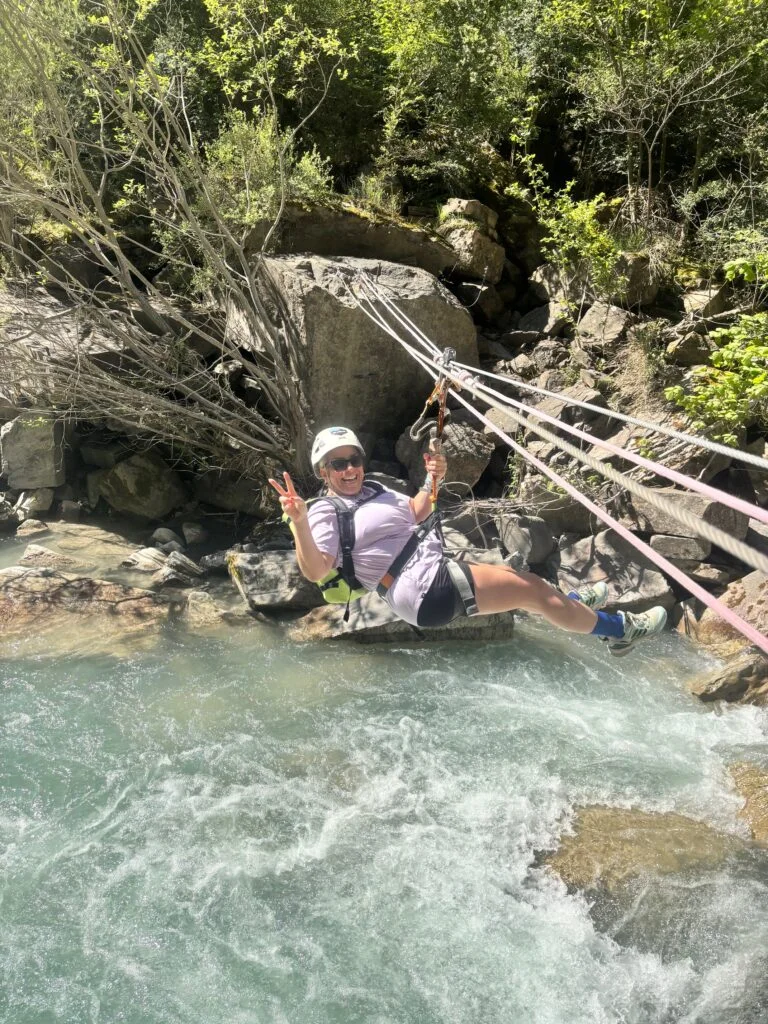
Snowmelt fills the Sorrosal river to its maximum. The water crashes down with deafening force and the spray reaches the base of the amphitheatre. The most spectacular time to visit. The via ferrata in spring includes a zip line over the gorge before the footbridge is installed.
Summer (July – August)
The flow reduces but the waterfall keeps running. The pool at the base is perfect for swimming. The most popular time for families. In summer, the rock face is in shade by mid-afternoon — ideal for the via ferrata.
Autumn (Sept – Nov)
The forest around the gorge turns amber and red. The flow picks up again with autumn rains. Fewer visitors, beautiful light and ideal temperatures for the via ferrata. One of the best times to visit.
Winter (Dec – Mar)
In very cold winters the waterfall can freeze completely, forming a 100-metre column of ice visible from the village. A unique spectacle. The via ferrata is closed in winter for safety reasons.
Climb the waterfall
from the inside
Seeing the Sorrosal waterfall from the base is free and beautiful. Climbing it from the inside is something else entirely.
Beside the waterfall throughout
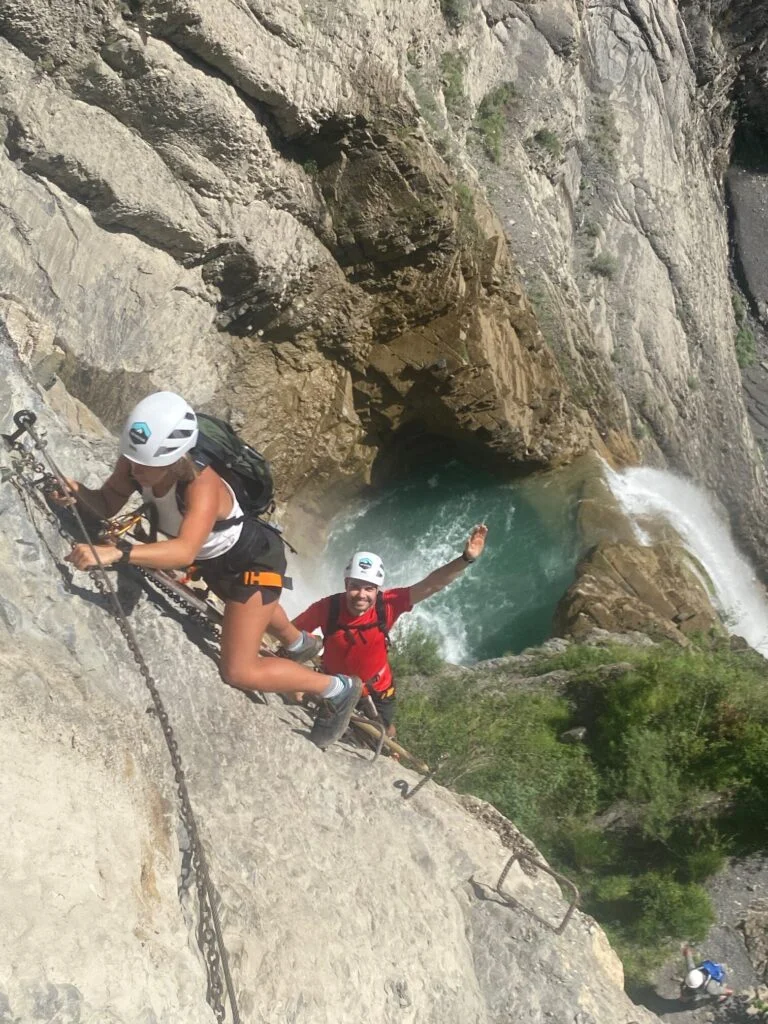
The via ferrata climbs parallel to both drops. There are sections where the water falls less than a metre away. Feeling the spray, the sound and the force from within is impossible any other way.
The hidden pool at 60m
Between the two drops there is a natural pool at around 60 metres height that cannot be seen from below. Only reachable via the ferrata. In summer it is perfect for a mid-route dip.
Rock tunnel & Tibetan bridge
The ferrata passes through a tunnel carved into the rock wall, then crosses the gorge on a Tibetan bridge with the water rushing below. The most memorable sections of the whole route.
Flysch in your hands
You progress literally over the folds of the flysch. Your hands touch rock that formed 50 million years ago. Guides point out marine fossils embedded in the strata as you climb.
The most accessible waterfall
in the Aragonese Pyrenees
350 metres of flat path from the car park to the base of the waterfall. Literally 5 minutes on foot.
Open every day: 8:00 – 20:00 (April – October)
Phone / WhatsApp: +34 662 954 303
The walk from the car park follows the Sorrosal stream on a flat concrete and earth path. It is very well signposted from the village. Along the way there is a small farm with animals that is popular with children. In under 5 minutes you reach the base of the waterfall, which is already visible from the path long before you arrive.
Questions about
the Sorrosal waterfall
Where is the Sorrosal waterfall?
The Sorrosal waterfall is in Broto village, Huesca, in the Spanish Pyrenees. It is 5 minutes walk from the centre of Broto along a flat, well-signposted path. Broto is 10 minutes by car from Ordesa and Monte Perdido National Park.
How tall is the Sorrosal waterfall?
The Sorrosal waterfall has a total height of around 100 metres over two drops: a lower drop of approximately 55 metres and an upper drop of around 45 metres. Between them there is a natural pool at about 60 metres height, only visible from the via ferrata.
Can you swim at the Sorrosal waterfall?
Yes. There is a natural pool at the base of the waterfall where swimming is possible in summer. There is also a second pool at mid-height in the gorge, accessible only via the via ferrata or by descending the canyon with a guide.
Is entry to the Sorrosal waterfall free?
Yes. Access to the base of the waterfall is completely free. The via ferrata that climbs the waterfall wall has an entry charge of 3.50€ per person (municipal fee, high season). Our guided activity costs 55€ per person, all inclusive.
What is the best time to visit the waterfall?
Spring (May–June) is the most spectacular time, when snowmelt pushes the flow to its maximum. Summer is the most popular for swimming. Autumn brings beautiful colours and fewer crowds. In winter the waterfall can freeze completely forming a 100-metre ice column visible from the village.
What is the via ferrata at the Sorrosal waterfall?
The Sorrosal Via Ferrata is a K2-K3 rated route that climbs the wall parallel to the waterfall. It passes both drops, goes through a tunnel carved into the rock and crosses the gorge on a Tibetan bridge. Guided activity from 55€ per person. Equipment rental available from 15€ at our shop in Broto.
Ready to climb
the Sorrosal waterfall?
Book the via ferrata by phone or WhatsApp. Limited spots per day.
Call: +34 662 954 303 →WhatsApp · · C. d'O Cuatrón 3, Broto